Should only be applied 1x as it has a strong tendency to run
To prevent blistering, bisque fire at 1000°C
Tends to blister with double-sided application on some clay bodies
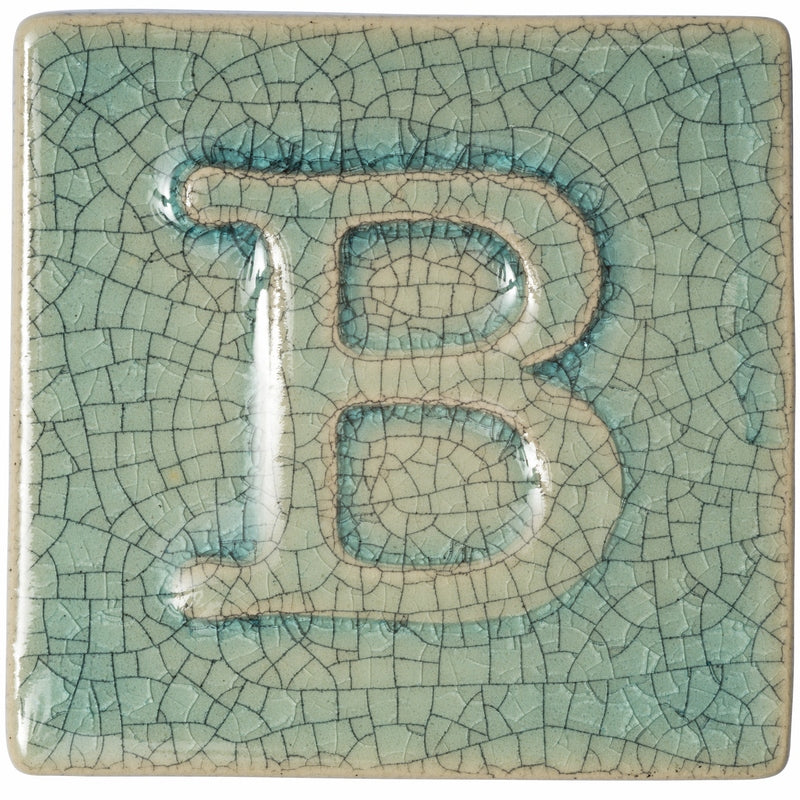
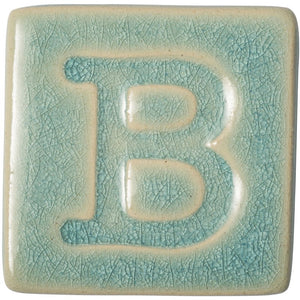
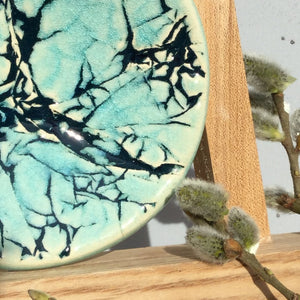
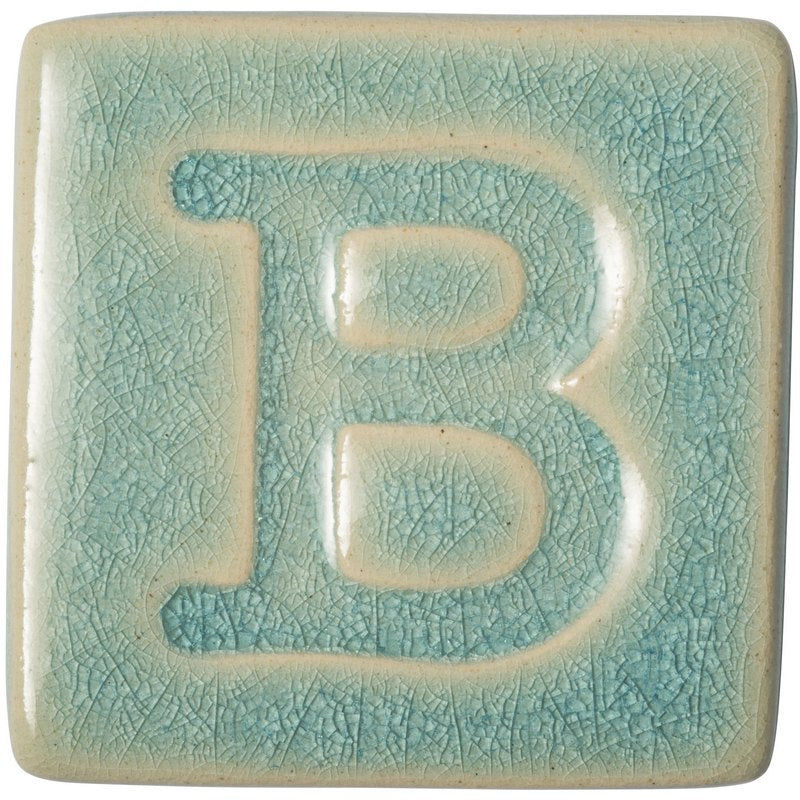
Crack formation usually occurs during cooling in the kiln and intensifies over time, sometimes taking up to 1 week
If cracks do not appear, the glaze can also be removed from the kiln at approximately 100°C and quenched in cold water
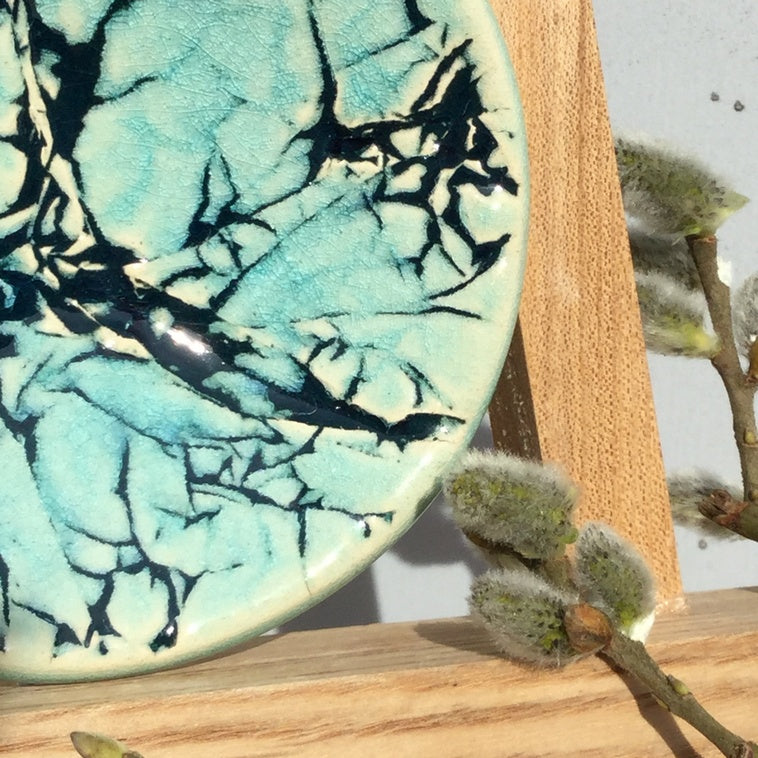
The crackle network is colored with, for example, black ink, colorful acrylic paints, strong black tea or similar
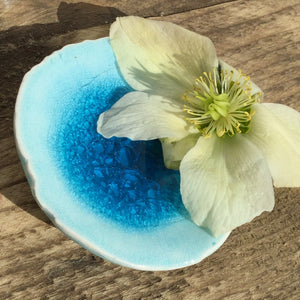
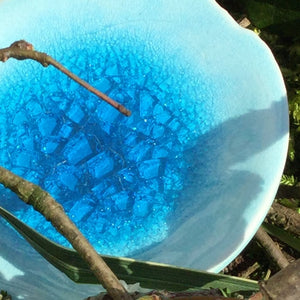
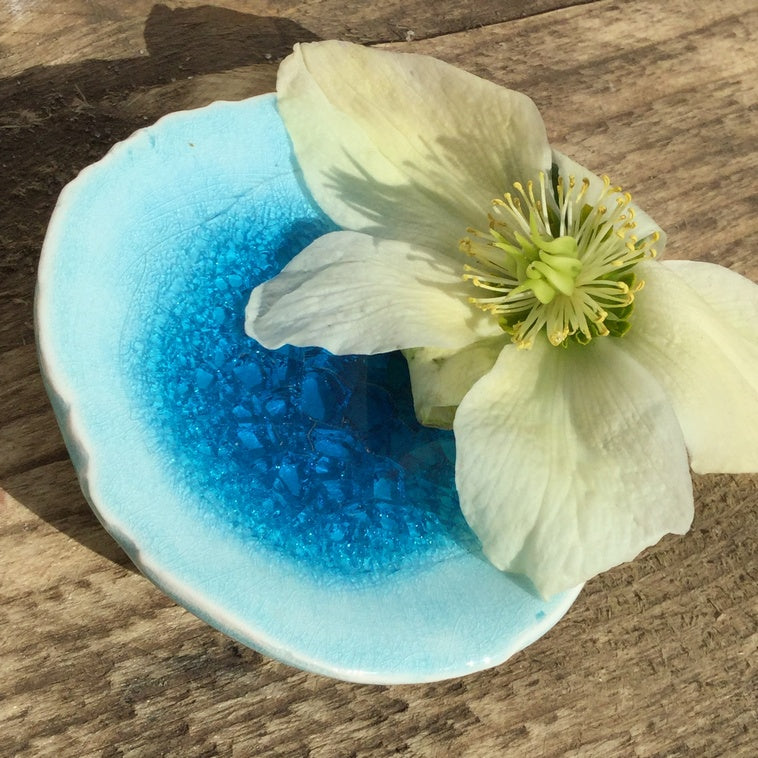
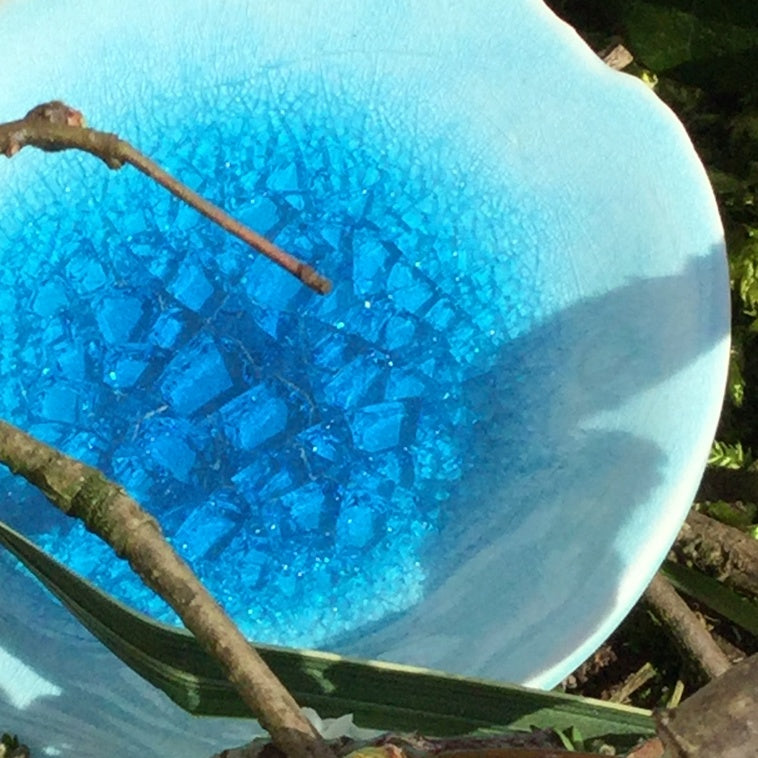
With slightly thicker application on horizontal surfaces, e.g., inner surface of plates and bowls, an interesting, darker turquoise scale crackle forms on some clay bodies
CHARACTERISTICS
Semi-transparent
Glossy
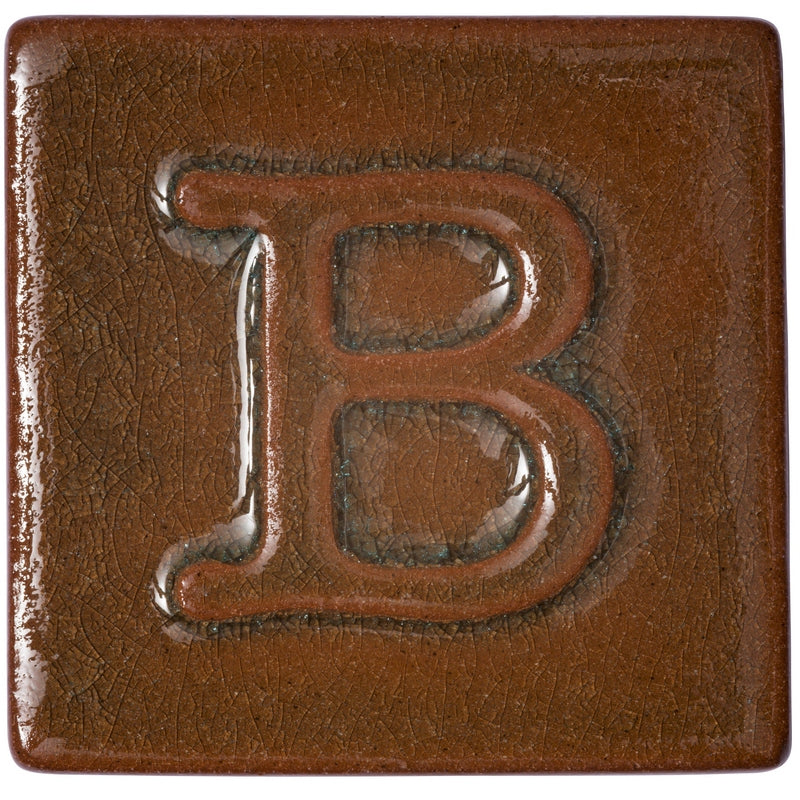
Crackled
Raku suitable
Tends to run
Forms cracks
stable in firing range
1020°C -
1060°C
MANUFACTURER
BOTZ GmbH
Rudolf-Diesel-Str. 57
48157 Münster
Deutschland / Germany

 EN
EN